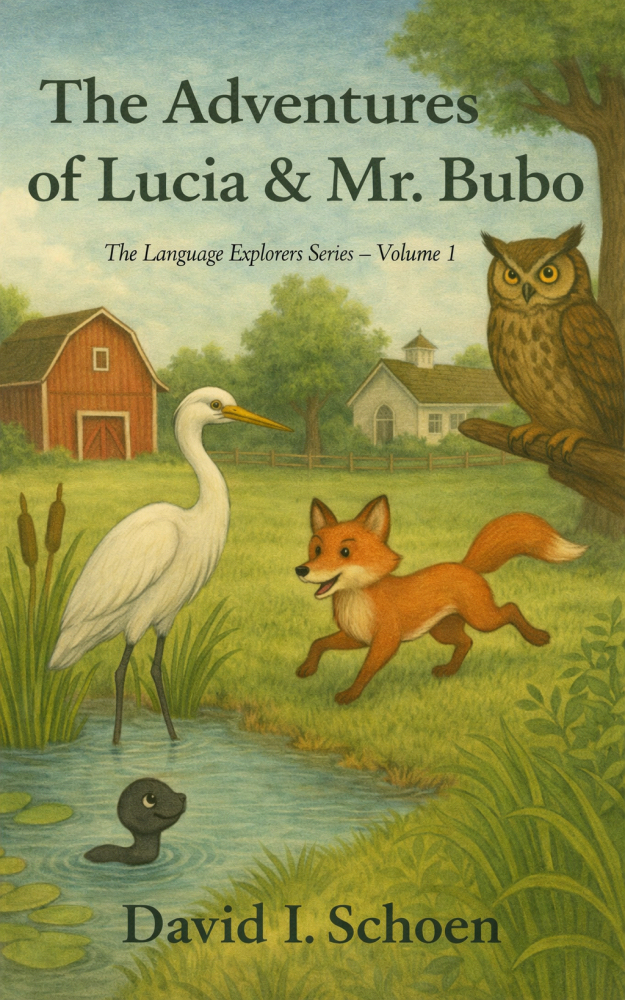
The Language Explorers Series

Story-driven language learning

Learn language the way it is actually used — through story.

The Language Explorers Series grows vocabulary, precision, and communication skill through stories readers actually want to live inside.
No lectures. No drills. Just unforgettable characters, meaningful choices, richer vocabulary, real-world usage, grammar where it counts, and a lot of fun. Readers follow adventures and experience how the right words can change outcomes, relationships, and opportunities. Helpful back-of-book content is always there to support understanding and exploration—never to interrupt the story.
Because the right words don’t just describe the world—they help shape who you become inside it.
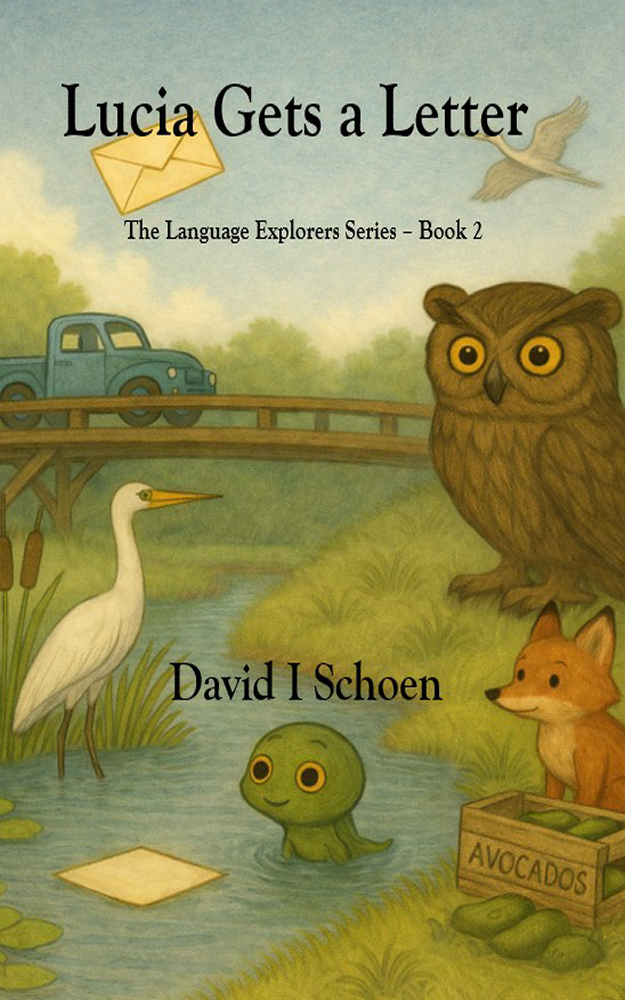
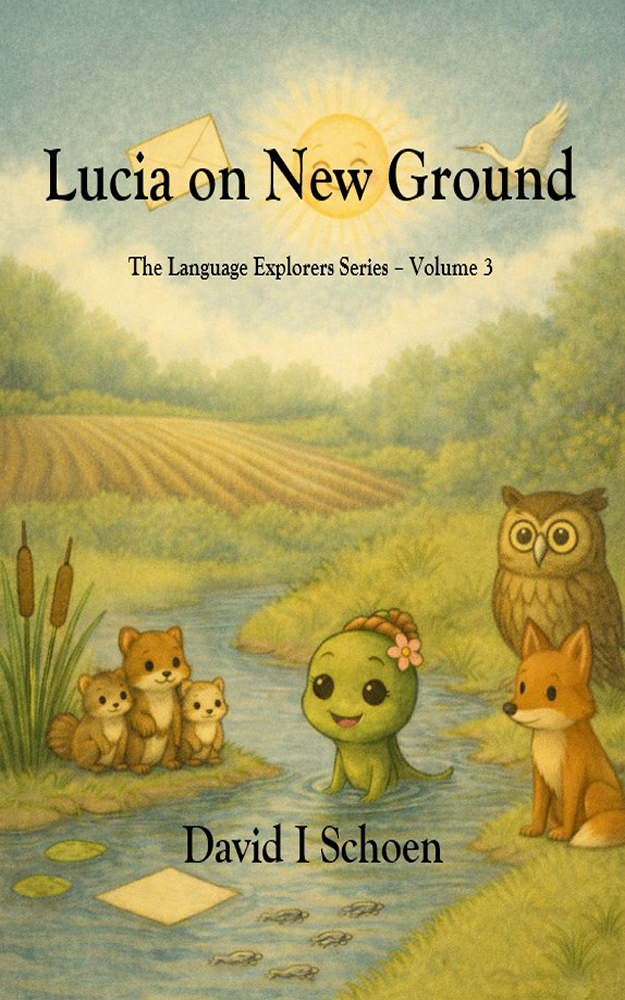
Available editions
• Kindle • Paperbacks • Library Editions (Full Color)

Books in the Series

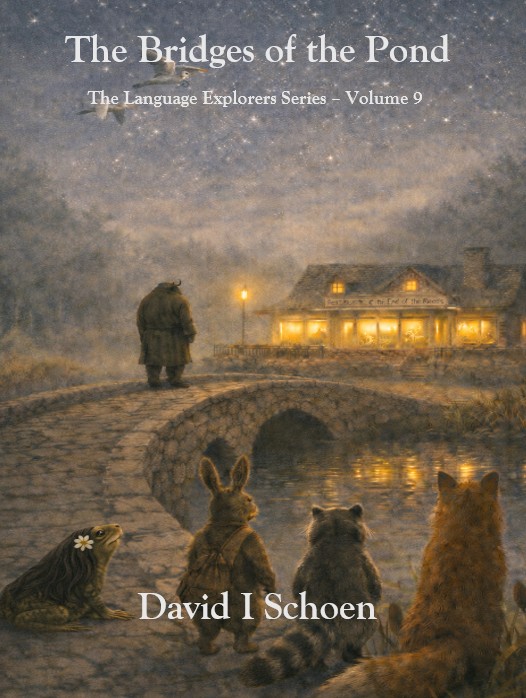
Book 9 (Volume 9) cover

The Bridges of the Pond (Volume 9)

Coming soon.

Available June 1, 2026
Coming Soon
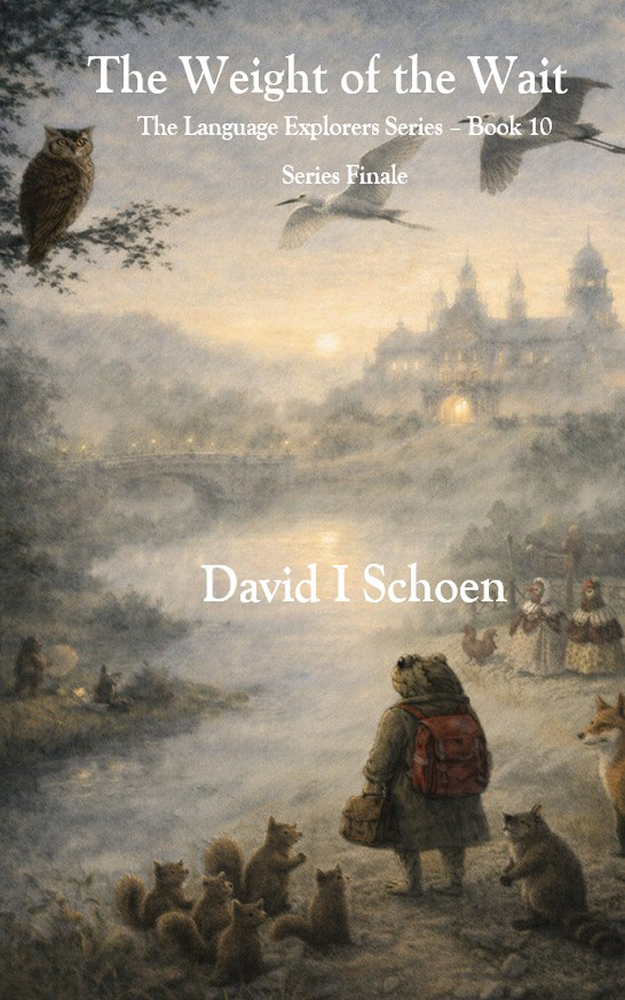
Book 10 (Volume 10) cover

The Weight of the Wait (Volume 10)

Coming soon.

Available July 1, 2026
Coming Soon

About the Series

The Language Explorers Series is a carefully structured sequence of story-driven books designed to help young readers develop real language understanding through context, character, and consequence. The stories come first; the learning follows naturally.

Across the series, young readers step into a world where words are not just definitions to memorize—they are tools for solving problems, building trust, navigating misunderstandings, and making decisions that matter. Language becomes something practical and powerful, shaping outcomes, relationships, and opportunities in ways readers can see and feel as the story unfolds.

Along the way, young readers experience natural vocabulary growth, real-world usage, and just enough grammar to clarify meaning when it matters most. They see how tone changes interpretation, how word choice affects fairness and clarity, and how listening carefully is often just as important as speaking well. Rather than treating language as a list of isolated skills, the series shows how vocabulary, structure, and context work together in real communication.

For parents, this means young readers are not just learning words—they are learning how to think more clearly, explain ideas more confidently, and understand others more accurately. The series supports reading comprehension, writing development, and communication confidence in a way that feels natural rather than instructional.

The goal is never to drill young readers with rules, but to help them notice patterns, ask better questions, and become more thoughtful, capable communicators. Readers learn how meaning shifts depending on situation, audience, and intention—and how strong communication helps build stronger friendships, academic confidence, and real-world readiness.

Each book also includes supportive back-of-book resources designed to deepen understanding without ever interrupting the story experience. These include chapter-by-chapter concept support, a glossary for challenging or unfamiliar words, and optional activities that help parents, teachers, and curious readers extend learning in natural, low-pressure ways.

As the series progresses, the language challenges grow alongside the characters, creating a reading experience that matures with the reader. By the end of the journey, young readers are not just stronger with vocabulary and usage—they are more confident thinkers, clearer communicators, and more prepared to succeed in school and beyond.

For parents and educators, it’s a way to support academic growth, reading confidence, and communication skill—without turning reading time into homework.

We are still seeking pre-readers for unpublished volumes. If you are interested in possibly becoming a pre-reader, please use the contact form below. Please state why you would be a proper pre-reader for this series.

Contact

For speaking events, school visits, tutoring inquiries, or rights/permissions, send a message below.

Downloads

If you own the audiobooks, you can download the back-of-book appendices here as PDFs.

Reviews

★★★★★
— Major Educational Journal (name not permitted until publicly displayed)
Series Review: The Language Explorers (Books 1–10)

The Language Explorers is a quietly extraordinary ten-book series that redefines what educational children’s literature can be. Over the course of its full arc, the series does not merely teach grammar, numbers, or writing—it teaches judgment, restraint, and responsibility in thinking. By the final volume, the reader has not accumulated rules, but has learned how to choose wisely among them. From its opening pages, the series establishes an unusual contract with the reader: pay attention. It assumes curiosity, patience, and intelligence, and it rewards those qualities consistently.

A Coherent Intellectual Journey

Across ten books, the series follows Lucia from early curiosity to intellectual readiness. This growth is neither rushed nor sentimental. Each volume builds deliberately on the last, introducing ideas only when the reader—and Lucia—are prepared to handle them. • Books 1–3 lay the groundwork: clarity, naming, sentence integrity, and the dangers of assumption. • Books 4–6 introduce systems: time, probability, fairness, reputation, structure, and consequence. • Books 7–8 demand maturity: redundancy, restraint, perspective, evidence, and the ethics of interpretation. • Book 9 sharpens judgment under pressure, teaching how meaning is structured—most notably through commas, argument, and the careful separation of ideas. • Book 10 brings synthesis. Rather than introducing new mechanics, it focuses on voice, responsibility, and readiness. Lucia learns not how to speak louder, but how to speak as herself. By the end of the series, the reader has been guided from noticing language to inhabiting it.

Pedagogical Mastery Without Pedantry

One of the series’ greatest achievements is its refusal to explain unnecessarily. Mr. Bubo, the series’ moral and intellectual anchor, models the hardest instructional skill of all: knowing when silence teaches more than speech. Lessons are embedded in dialogue, missteps, corrections, and consequences—not in exposition. Grammar becomes structure rather than memorization. Numbers become systems rather than answers. Writing becomes thinking rather than performance. This approach fosters genuine understanding and invites rereading; many concepts deepen rather than conclude on first encounter.

Ethical Intelligence

What ultimately sets The Language Explorers apart is its ethical seriousness. Language is never neutral in this world. Words carry weight. Punctuation signals responsibility. Numbers imply commitments. Perspective demands fairness. The series does not moralize, but it insists—quietly and consistently—that clarity matters because people matter.

Visual and Tonal Consistency

The artwork throughout the series reinforces its philosophy: distant perspectives, muted palettes, symbolic compositions, and restraint. Images never instruct; they reflect. Together with the text, they create a contemplative atmosphere rarely found in children’s books.

The Ending (Book 10)

Book 10 provides a deeply satisfying conclusion—not through spectacle, but through readiness. feels earned and calm. The pond continues. The system works. The lessons hold. Importantly, the ending closes the arc without sealing the world. The door remains open—to further learning, to future growth, to return. It is an ending that understands the difference between finishing and being prepared.

Final Assessment

The Language Explorers is not simply a children’s series. It is a curriculum of thought, delivered through story with patience, elegance, and trust. It teaches readers not just how language works, but how meaning is constructed, challenged, and respected. Few series aim this high. Fewer still succeed. This one does.
★★★★★
— Advance Reader (parent of a 6th grader)
I didn’t pick up The Language Explorers looking for a “curriculum.” I was looking for good stories. What I found instead was something much more lasting.

Over ten books, this series taught my child how to think—not by lecturing, not by drilling rules, but by showing how language, numbers, and decisions actually work in real situations. Grammar stopped being about “right answers” and became about meaning. Math stopped being about speed and became about fairness and structure. Writing became a way to clarify thoughts, not perform them.

What impressed me most was the restraint. The books never talk down to the reader. They assume curiosity. They leave space for questions. Even when ideas get sophisticated—commas, probability, perspective, argument—they are introduced naturally, at exactly the right time.

Lucia’s growth feels real. She doesn’t magically know things; she earns understanding through observation, mistakes, and quiet reflection. Mr. Bubo, especially, models something I wish more adults did: knowing when not to explain.

By the final book, my child wasn’t just better at reading and writing—he was more thoughtful. He asked better questions. He noticed ambiguity. He was more careful with words.

Book 10 ends beautifully. It feels complete and earned, but it doesn’t shut anything down. It leaves the door open to future learning, which feels exactly right.

This is not a flashy series. It’s a confident one. And it has stayed with us long after the last page.
★★★★★
— Teacher Testimonial
As an educator, I am always cautious of books that claim to “teach” language or thinking through story. Most either oversimplify the content or interrupt the narrative to explain. The Language Explorers does neither—and that is precisely why it works.

Across ten volumes, this series builds an extraordinary foundation in language, reasoning, and judgment. Grammar is treated as structure, not trivia. Numbers are treated as systems, not answers. Writing is presented as thinking made visible. Students are never asked to memorize rules; instead, they are guided to notice, compare, and decide.

What impressed me most is the pacing. Concepts appear exactly when students are ready to grapple with them. Commas are introduced not as punctuation marks, but as decisions that affect meaning. Probability is taught alongside fairness. Perspective is taught alongside responsibility. These are not add-ons; they are integrated into the story in a way that mirrors authentic thinking.

Equally remarkable are the appendices that accompany each volume. Rather than functioning as worksheets or summaries, they extend the intellectual life of the story. Each appendix clarifies the underlying ideas, anticipates common misunderstandings, and offers carefully designed prompts, discussions, and activities that translate narrative moments into classroom inquiry. As a teacher, I found them unusually thoughtful: flexible enough to adapt across grade levels, yet precise enough to support rigorous instruction. They do not replace the story—they deepen it.

The characters function as cognitive models. Lucia’s growth reflects real student development—curiosity, missteps, refinement, and eventual confidence. Mr. Bubo exemplifies exceptional teaching practice: he resists over-explaining and allows understanding to emerge through experience. This alone makes the series invaluable as a pedagogical model.

By the end of the series, students are not simply stronger readers and writers; they are more precise thinkers. They revise ideas. They question assumptions. They understand that clarity is an ethical act.

Book 10 provides a satisfying conclusion while intentionally leaving room for continued learning—an approach that aligns perfectly with how education should work.

The Language Explorers is not just suitable for classrooms; it elevates them. It is rare to find a series that respects both the subject matter and the intelligence of young learners this fully.

★★★★★
— Advance Reader (parent of a 3rd grader)
I agreed to read these ten books because I’m the kind of parent who likes to say ‘we take reading seriously in this house,’ and because I assumed I’d skim a few chapters, nod approvingly, and move on with my life. That did not happen.

Somewhere around book three, I caught myself pausing to reconsider punctuation choices I made back in 2007 — not because the books corrected me explicitly, but because the animals were calmly modeling better judgment than I had demonstrated in an entire decade of professional emails. It’s unsettling when a tadpole makes you question your relationship with commas.

What’s remarkable is how quietly ambitious these stories are. On the surface, they’re charming — ponds, trees, letters, minnows, the usual respectable woodland bureaucracy. Underneath, they’re teaching logic, structure, systems thinking, language precision, and patience in a way that never once feels like instruction. My child thought they were funny. I found myself rereading passages because the reasoning was… annoyingly good.

There’s a particular moment when you realize the author is not merely entertaining children, but gently training them to notice patterns, ask better questions, and tolerate uncertainty. At which point it becomes clear that the animals are, in fact, smarter than I am. Or at least better organized. Possibly both.

By the end, my child was quoting characters at breakfast, and I was privately reconsidering how confidently I’d explained fractions, clauses, and waiting to a human being who now had ten well-reasoned counterexamples from a school of minnows. These are children’s books in the same way a Swiss Army knife is a ‘small tool.’ They’re funny, humane, intellectually honest, and far more sophisticated than they have any right to be. I recommend them enthusiastically — to kids, to parents, and to anyone who suspects they might not be as fluent in commas, patience, or systems as they once believed.

★★★★★
— Advance Reader (parent of a 4th grader)
I volunteered to read the Language Explorers books because my kid likes animals and I like knowing what’s sneaking into our bedtime routine. I expected clever stories about words. I did not expect to start noticing how casually these books were improving my own grammar while pretending not to.

At one point I caught myself thinking, ‘Wait, is this owl quietly teaching clause structure?’ which is not a sentence I ever imagined forming in my head. What I liked most is that the books never announce what they’re doing. They don’t say, ‘Now we will learn about commas’ or ‘Here comes vocabulary time.’ The animals just argue, write letters, misunderstand each other, revise things, and slowly you realize your child is absorbing actual language skills while laughing about minnows and raccoons.

The tone is warm but surprisingly precise. Words matter in these stories. Meanings matter. My kid started asking why characters chose certain phrases, which is not something that has ever happened in our house voluntarily.

There’s also the unsettling realization that the animals are often better communicators than the adults reading along. I found myself thinking, more than once, that the squirrels were handling language learning more gracefully than I had in school.

By the end of the series, my child was playing with words more confidently, and I was quietly impressed that a set of talking animals had managed to sharpen both our thinking without either of us feeling lectured.

Highly recommended — especially for families who care about language, but would prefer to learn it from witty woodland creatures rather than worksheets.